


Allan Tablan, MS, RDN
You’ve seen Omega-3s mentioned in everything from news headlines to egg containers, and you know they’re supposed to be good for you. But what exactly are they doing for your health? And how can you get more of them into your meals without a lot of fuss or extra work?
Answering those questions requires an expert in nutrition and healthy cooking, so we tapped Allan Tablan, MS, RDN, who is both a Culinary Institute of America-trained chef and a registered dietitian nutritionist.
Here, Allan shares his perspective on Omega-3s and, most importantly, how to get more Omega-3-rich foods onto your plate—not just because they’re nutritious, but because they’re delicious!
Q: First, what are Omega-3s?
Allan: Omega-3s are an essential type of polyunsaturated fat. Don’t let the word “fat” put you off! It’s the good, heart-healthy kind of fat that you want to eat more of.
Breaking it down even further, Omega-3 is an essential fat, which means your body can’t make the nutrient on its own. You need to get Omega-3s from outside sources—that is, the food you eat.
Q: Why are Omega-3s good for us?
 Allan: Our bodies use Omega-3s in many ways. They offer a range of potential health benefits, from heart health to eye health to brain health and cognition, and even mental and emotional wellbeing. And ongoing research continues to reveal more benefits all the time.
I’d say the most important thing to know about Omega-3s is that they have been shown to lower triglycerides, which lowers your risk for heart disease and stroke. That’s where the strongest scientific evidence is.
Other studies have demonstrated that Omega-3s reduce inflammation, which may protect against certain cancers and autoimmune diseases. They also may enhance cognitive function. And there is evidence that Omega-3s can help with depression and anxiety, although they’re not a replacement for professional treatment.
These findings are promising, and further research is ongoing to better understand the connection between Omega-3s and this wide variety of potential health benefits.
You may encounter a debate between people discussing the balance of Omega-3s and another essential fat called Omega-6s in the diet. If you’re interested in learning more about this topic, check out this piece from Harvard Health.
Q: Which foods contain the most Omega-3s?
 Allan: Omega-3s can come from both animal sources and plant sources. Animal sources are fatty fish like salmon, trout, sardines, and mackerel. Salmon is by far the most common—it’s what most people think of when they think of Omega-3s.
For many people, plant sources are going to be easier to eat regularly. You have a lot of options, including:
- vegetable oils, such as flax, soy and canola oil
- seeds, like chia and flaxseed
- nuts, especially walnuts
Animal and plant sources contain different subtypes of Omega-3s, each with its distinct health benefits. That’s why it’s a plus to eat Omega-3-rich foods from both sources.
Q: How much Omega-3s should we be eating?
Allan: There are no official guidelines for Omega-3s, but generally, most Americans do not get enough of this nutrient. If these foods are new to you, start small. If you can eat one good source of Omega-3s once a day, or even a couple of times a week, that’s a win in itself. The American Heart Association recommends eating fatty fish twice weekly, in part because they are a good source of heart-healthy Omega-3s.
| Food | Omega-3 content per serving (Source) |
| Flaxseed oil | 7,260mg per 1 tbsp. |
| Chia seeds | 5,060mg per 1 oz. |
| Walnuts | 2,570mg per 1 oz. |
| Flaxseeds, whole | 2,350mg per 1 tbsp. |
| Salmon, farmed and cooked | 1,830mg per 3 oz. |
| Canola oil | 1,280mg per 1 tbsp. |
| Mackerel, cooked | 1,020mg per 3 oz. |
| Soybean oil | 920mg per 1 tbsp. |
Q: There are foods fortified with Omega-3s. Do fortified foods count?
Allan: Yes, you’ll see foods like eggs, yogurt, and milk that are fortified with Omega-3s, meaning the nutrient is added to them. It’s another great way to get Omega-3s. It all comes down to which foods are accessible for you and what do you enjoy?
Q: What’s your take on Omega-3 supplements?
 Allan: Research has shown that for most healthy people, the best way to get your Omega-3s is through whole foods, not supplements. I recommend a food first approach from both a nutritional point of view and also as a chef, because food sources offer more than just the Omega-3s themselves.
For example, when you look at chia and flaxseeds, you’re also getting fiber, which is so important for good health. Same thing with fatty fish like salmon—yes, you get the Omega-3s, but you also have all the other nutrients and it’s a great source of protein. By eating whole foods, you’re getting so much more nutrition.
If you are at high risk of heart disease or are allergic to fish, Omega-3 supplements might make sense. But be sure to talk with your doctor before getting started on any supplements for specific health conditions.
Q: OK, let’s get cooking! What are your favorite ways to eat Omega-3-rich foods?
Allan: The key is finding ways to enjoy them without changing your daily eating habits too much. Start with what you’re comfortable cooking and enjoy eating, and experiment from there. Let’s take them one by one.
Salmon and Other Fatty Fish
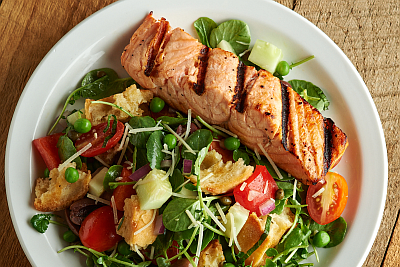
How to buy it: I’m a big fan of fresh fish, but sometimes it’s easier and more convenient to buy it canned or frozen. Farm-raised fish generally has as much or more Omega-3s than wild fish, but both are great choices. Fish adapts well to many flavor profiles like Asian, Mediterranean, and Caribbean. You can even get the fillets pre-seasoned, if you don’t want to do it yourself.
Ways to enjoy it: For breakfast, I love a little smoked salmon on a bagel. It’s super easy and requires no work (although since it can be high in sodium, I only have it as a treat). For an easy dinner, you can put salmon on a sheet pan with vegetables and baby potatoes and throw it in the oven for about 30 minutes. It’s even quicker in an air fryer!
Blackened or grilled salmon has a lot of flavor, or you can substitute flaked salmon in a crab cake recipe. Another way to introduce Omega-3s is to make a salmon burger, either from canned fish or a whole piece of fish. Then put your favorite sauce or toppings on it, with your bun of choice.
Cooking tips: Cooking fish can take a little practice. Make sure to oil up the grill or pan so the fish doesn’t stick. Check out our podcast on Healthy and Delicious Seafood.
Recipes to try: Grilled Garlic-Herb Salmon; Ginger Salmon Bowl; Grilled Salmon Sandwich with Spicy Remoulade; Chimichurri Salmon Burger
Flaxseeds and Chia Seeds

How to buy it: You can buy whole seeds in bulk at most grocery stores. Flaxseeds are also available pre-ground, or you can grind your own at home using a blender, food processor, or clean coffee grinder.
Ways to enjoy it: Energy bites! They stay good for a long time and are super-customizable, starting with a base of oats and nut butter. For sweetness, you can add a few chocolate chips or a touch of maple syrup or honey. Around campus, we call them Bites That Do It Right.
Other options are to add Omega-3-rich seeds into foods you already eat regularly, from trail mix and granola to yogurt, oatmeal, and smoothies. These are versatile ingredients with a mild flavor, so you will barely notice the difference. You don’t need that much; a tablespoon is enough. Soaked chia seeds have a gelatinous texture that acts like a thickener for smoothies and puddings.
Cooking tips: These foods are almost foolproof to make. For the energy bites, all you really need are a bowl and your hands for mixing and shaping. You don’t even have to measure the ingredients precisely.
Recipes to try: Blueberry Banana Smoothie; Strawberry Coconut Chia Pudding; Peanut Butter Flax Energy Bites; Sunflower Butter Chocolate Energy Bites; Peanut Butter Chia Overnight Oats; Multi-Grain Waffles
Walnuts

How to buy it: Buy shelled walnuts in bulk at most grocery stores, either whole or pre-chopped.
Ways to enjoy it: A handful of walnuts makes a great, filling snack. They also add crunch to baked goods like banana bread or brownies. Sprinkle walnuts on a salad or use them to replace some of the meat in your next stir fry. You can also add them to those energy bites we talked about earlier.
Cooking tips: Eat walnuts raw, or for a deeper flavor, toast them in a skillet or oven.
Recipes to try: Zucchini Bread; Walnut Tacos; Tunisian Carrot and Walnut Salad
Oils
How to buy it: Common Omega-3-rich oil sources include soybean, canola, walnut, and flaxseed.
Ways to enjoy it: Oils are healthiest when used in moderation, as they are still high in calories. Use them as a heart-healthy replacement for butter or other animal fats that are higher in saturated fat.
Cooking tips: Turn to this blog for our complete guide to cooking oils!
Recipes to try: Turmeric Ginger Vinaigrette; Spicy Lime Marinade; Sesame-Crusted Tilapia with Garlic Vegetables
All-in for Omega-3s
Now that you know how Omega-3s can boost your health and have plenty of delicious ways to enjoy them, eating more of these foods doesn’t have to feel like a chore. Pick one or two ideas and give them a try—whether it’s a simple salmon dinner or chia seeds in your morning smoothie. You might just discover your new favorite way to eat well!
For lots more recipes, visit the Feed Your Potential Recipe Database.
Note: Since everyone’s health history and nutritional needs are so different, please make sure that you talk with your doctor and a registered dietitian to get advice about the diet and exercise plan that‘s right for you.